Chapter 1
Welcome to the Resistance Bands


By the end of this chapter, you’ll understand:
Resistance bands are made from elasticated material and are used to apply tension to the body during movement or stretching. Unlike passive stretching, bands create constant, adaptable resistance, allowing you to both stretch and strengthen the body simultaneously.
In this course, we are teaching you how to use bands in ways that:
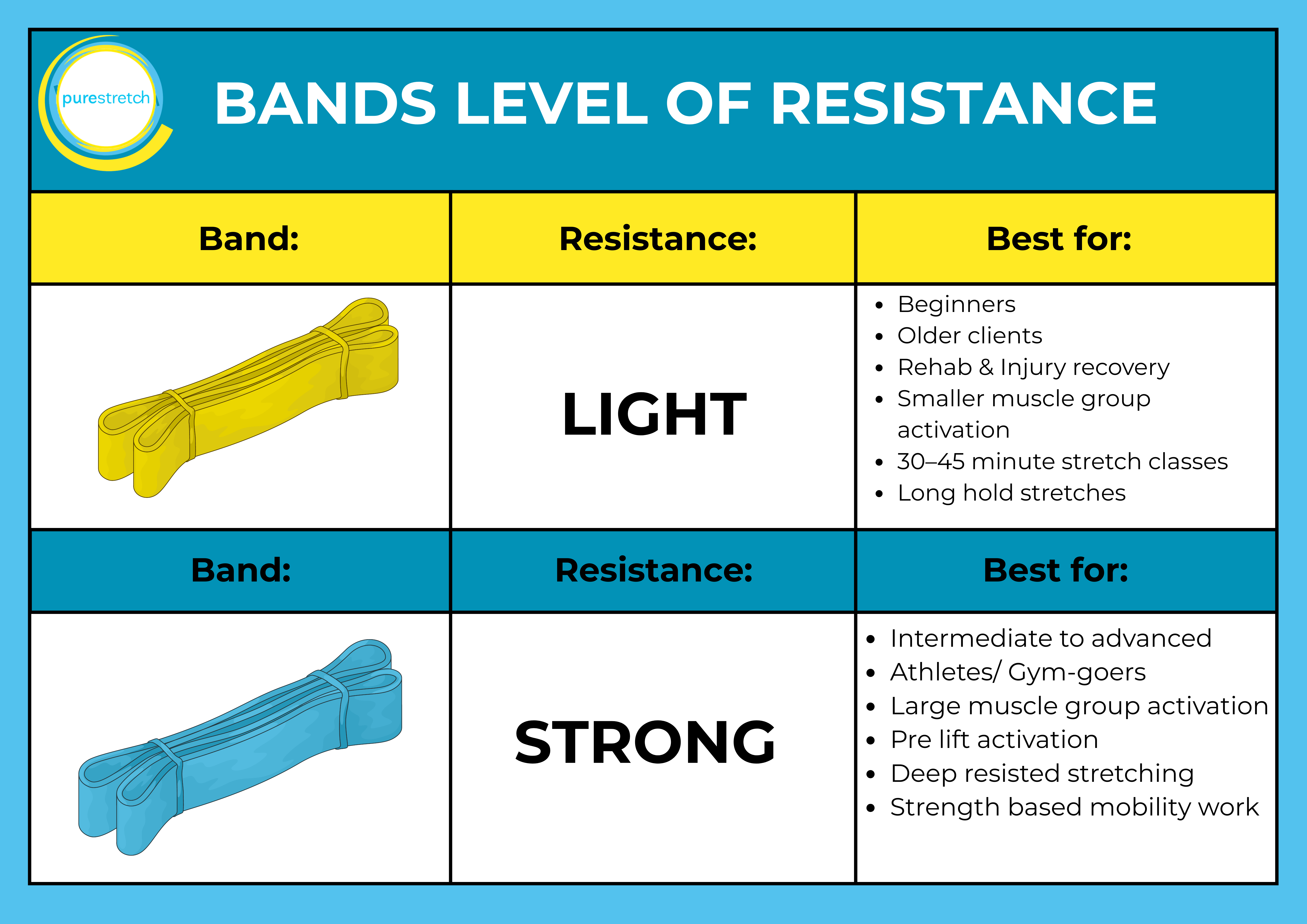
 Our Bands: Two levels of resistance
This course uses two band strengths:
You’ll learn how to choose the right band based on the client and the movement, not just the strength.
Use the light band for precision, small muscle work, and gentle stretching. Use the strong band for larger movements, stronger clients, or deeper activation/stretching
Resistance stretching vs Static Stretching:
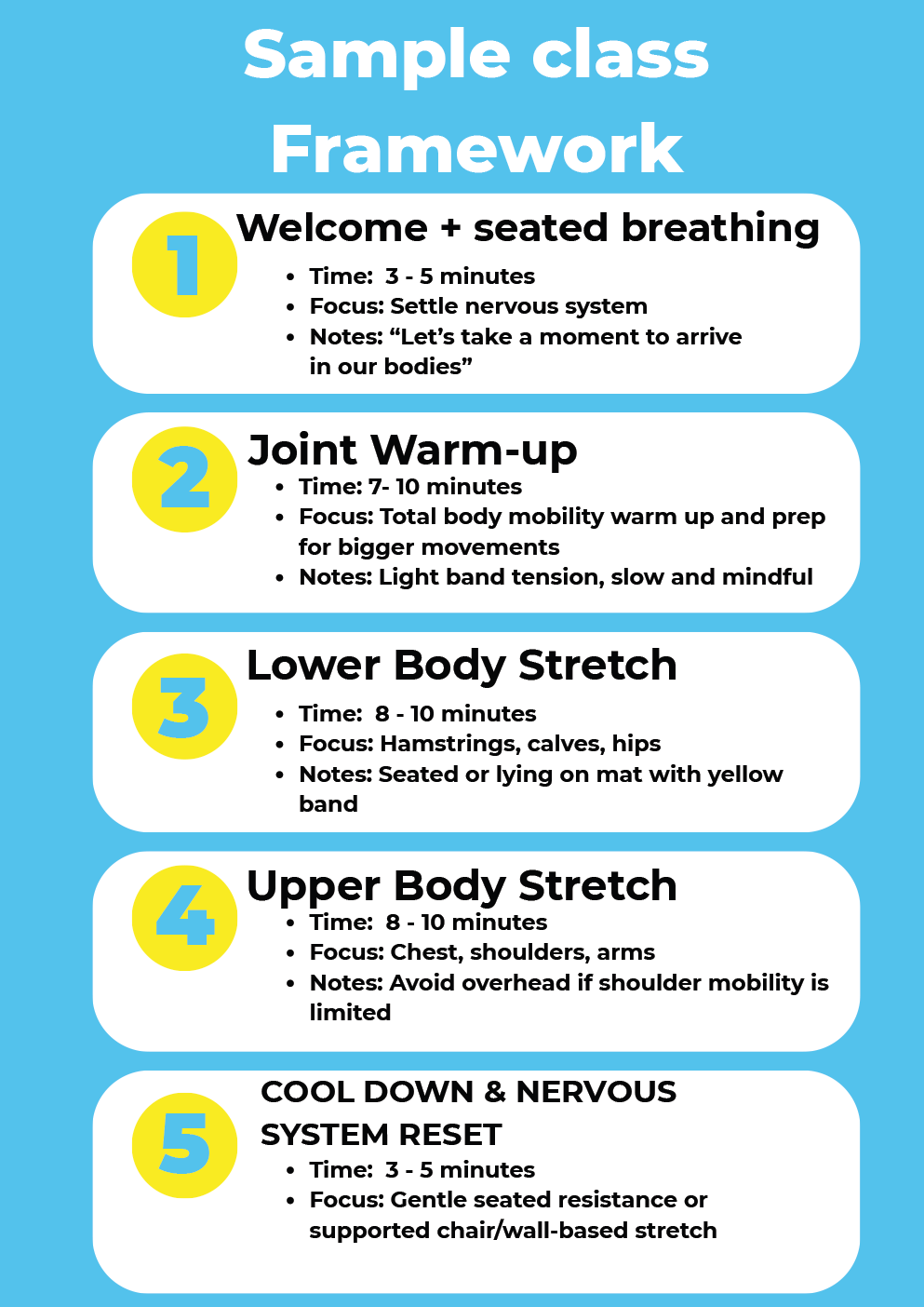
As an Instructor, you’ll be able to use resistance bands in a variety of settings. Here’s how we’ll teach you to apply them:
Whether you’re teaching a stretch class, coaching a lifter, or helping a client recover — resistance bands are a powerful tool to add to your teaching toolkit.
We have our own selection of purestretch music that we feel is suitable for these classes. If you would like to access this please get in touch and we can add this to your dashboard.
When teaching with bands, always follow these safety basics:
1. Check the Band First Look for signs of wear, tears, or overstretching.
2. Anchor Securely If wrapping around feet, hands, or furniture — check that it’s stable and won’t slip.
3. Control the Recoil Teach clients to return slowly — bands want to snap back. Controlled returns prevent injury.
4. Cue Breathing Encourage exhaling on effort and steady breathing during holds.
5. Don’t Overstretch Bands should be taut, but not maxed out.