Chapter 7
Fascial Release and Resistance stretching


What is Fascia?
Fascia is the connective tissue that runs throughout the body, creating a continuous web that surrounds and interlinks muscles, bones, and organs. Instead of seeing muscles as isolated units, fascia shows us that the body works as one integrated system.
When fascia is healthy:
When fascia is unhealthy (tight, restricted, dehydrated):
Purestretch recently came across the amazing Karin Gurter, who has developed a movement system that uses the ‘Tom Myers Anatomy Trains’ concept, for training Fascia Lines.
Fascia lines are the body’s connected pathways, long chains of muscle and connective tissue that link movement from head to toe.
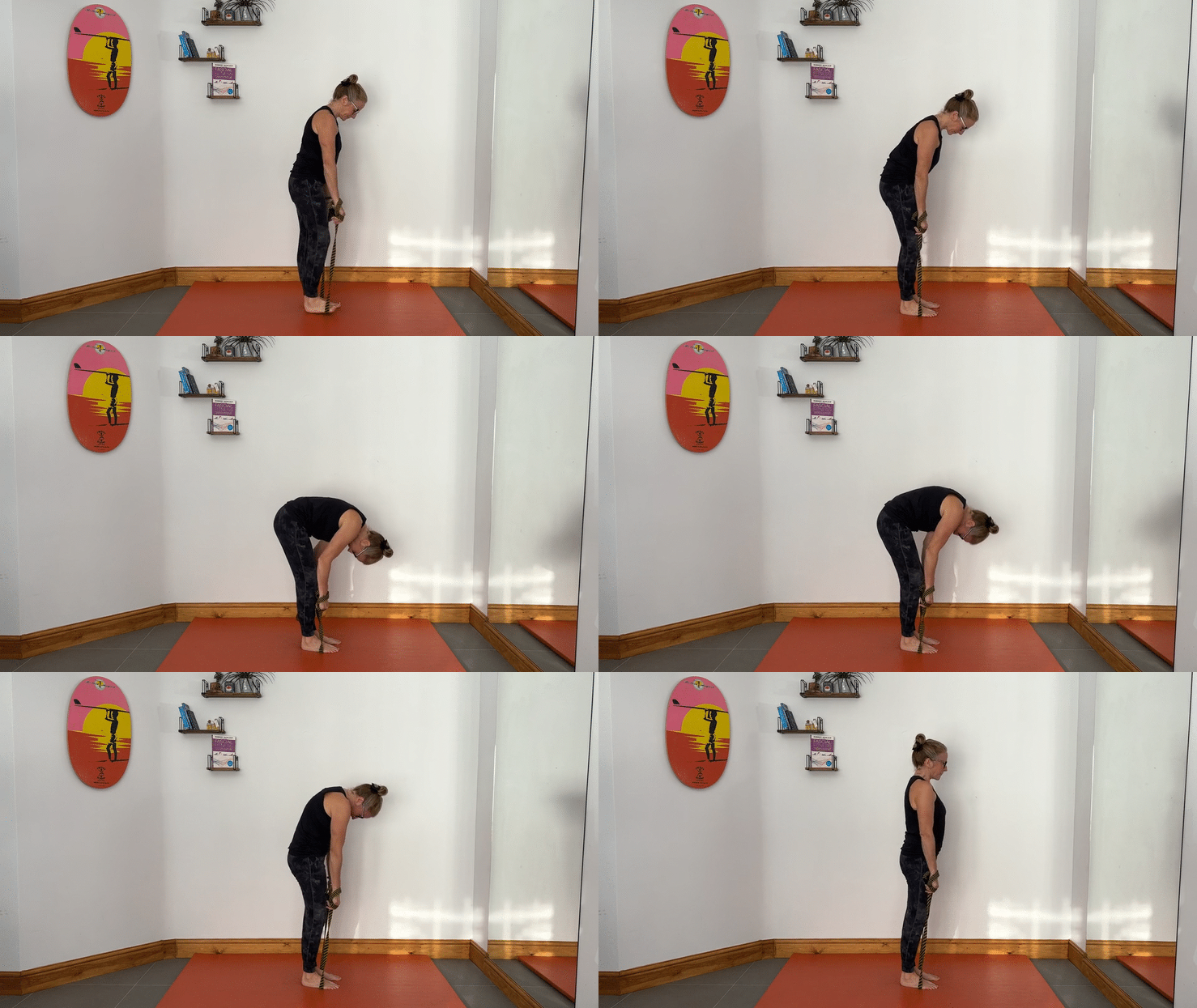
We have included a few of the fascia line diagrams from the Purestretch Fascia Workshop to give you a better understanding of how movement with a resistance band can really target those lines.
SUPERFICIAL FRONT LINE

SUPERFICIAL FRONT LINE FOCUSED MOVEMENT
-high.gif)
SUPERFICIAL BACK LINE

SUPERFICIAL BACK LINE FOCUSED MOVEMENT
SPIRAL LINE

LATERAL LINE FOCUSED MOVEMENT
-high.gif)
LATERAL LINE

SPIRAL LINE FOCUSED MOVEMENT
-high.gif)
Why Fascia Loves Resistance Stretching
Teaching points for clients:
Use cues like:
 “We’re training the body’s elastic web, not just a single muscle.”“This helps your body feel lighter, looser and more connected.”
“We’re training strength and flexibility together, that’s why you’ll feel more spring your step afterwards”
” fascia adapts slowly – consistency matters more than intensity”
“The bands are helping your fascia learn to glide smoothly instead of feeling stick or tight”
Benefits Clients Will Feel
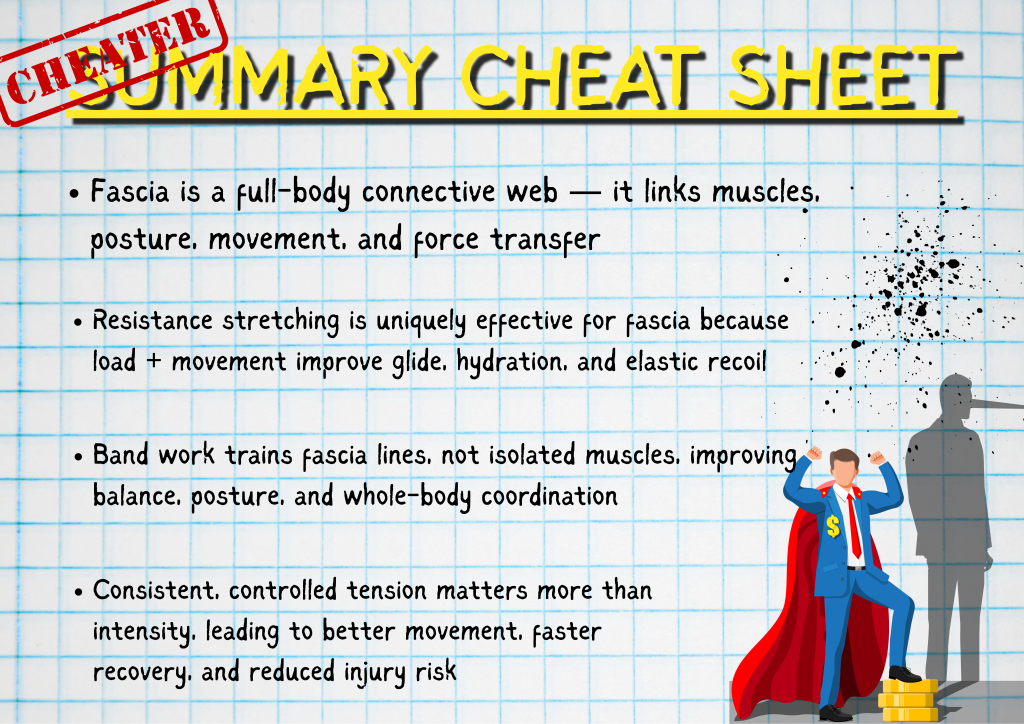
Research Highlights (Cheat Sheet for You)
Key takeaway for you as an instructor:
Resistance stretching with bands isn’t just about muscles, it’s about training the fascia system. This is what makes it so effective compared to static stretching.