Chapter 6
Leading a 45 minute band stretch class (with a focus on limitations and older adults)


It’s common for classes to include people with limitations, for example:
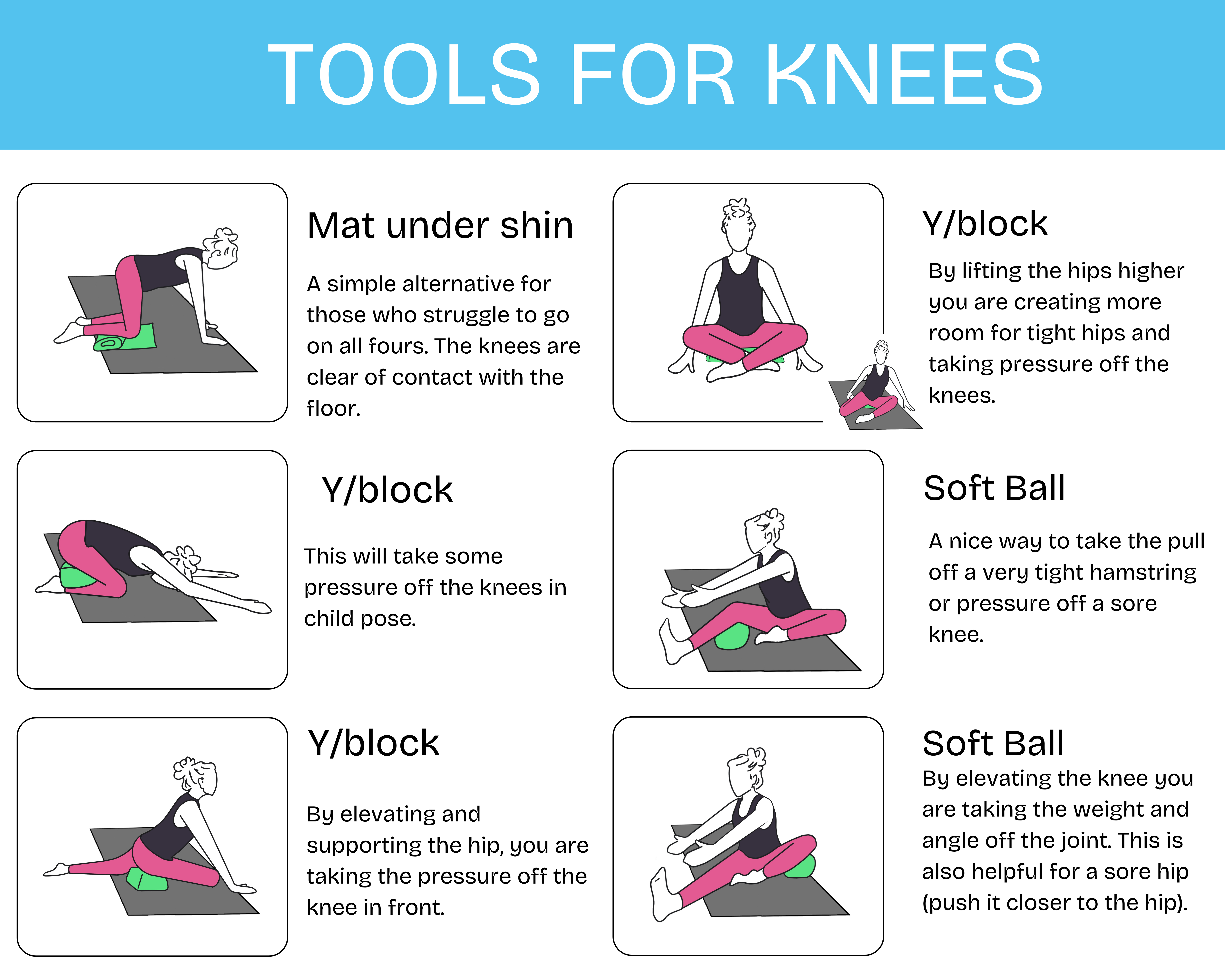
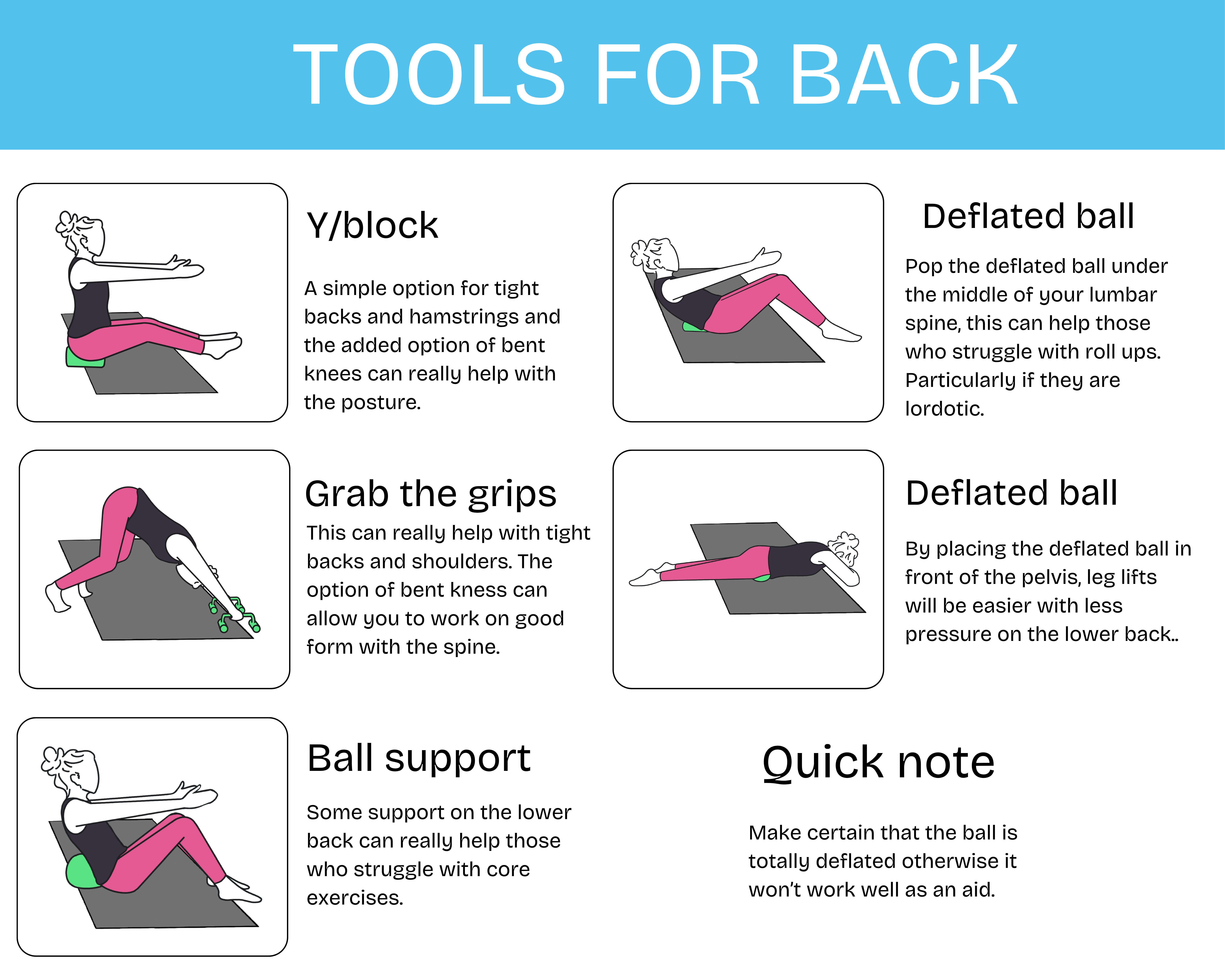
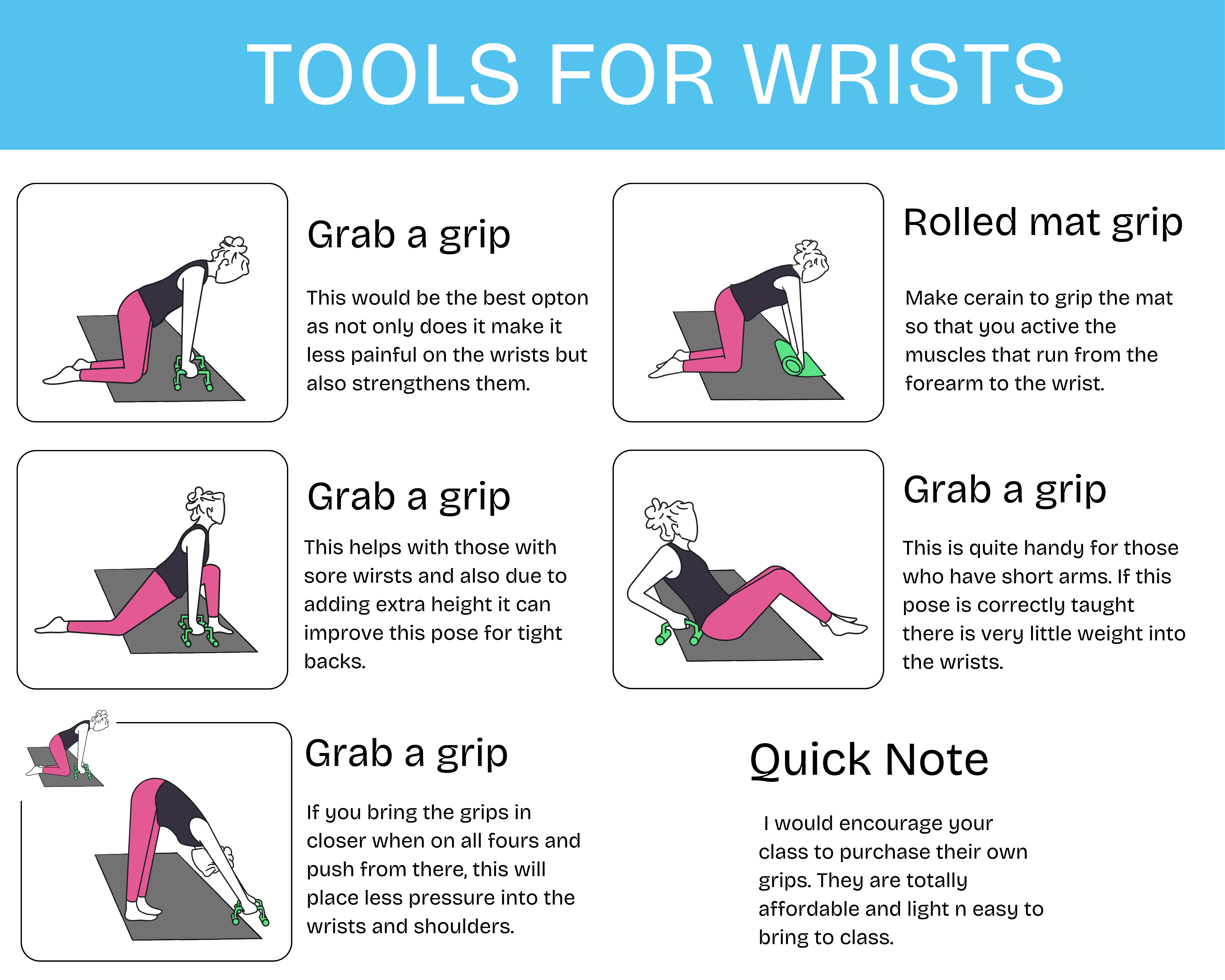
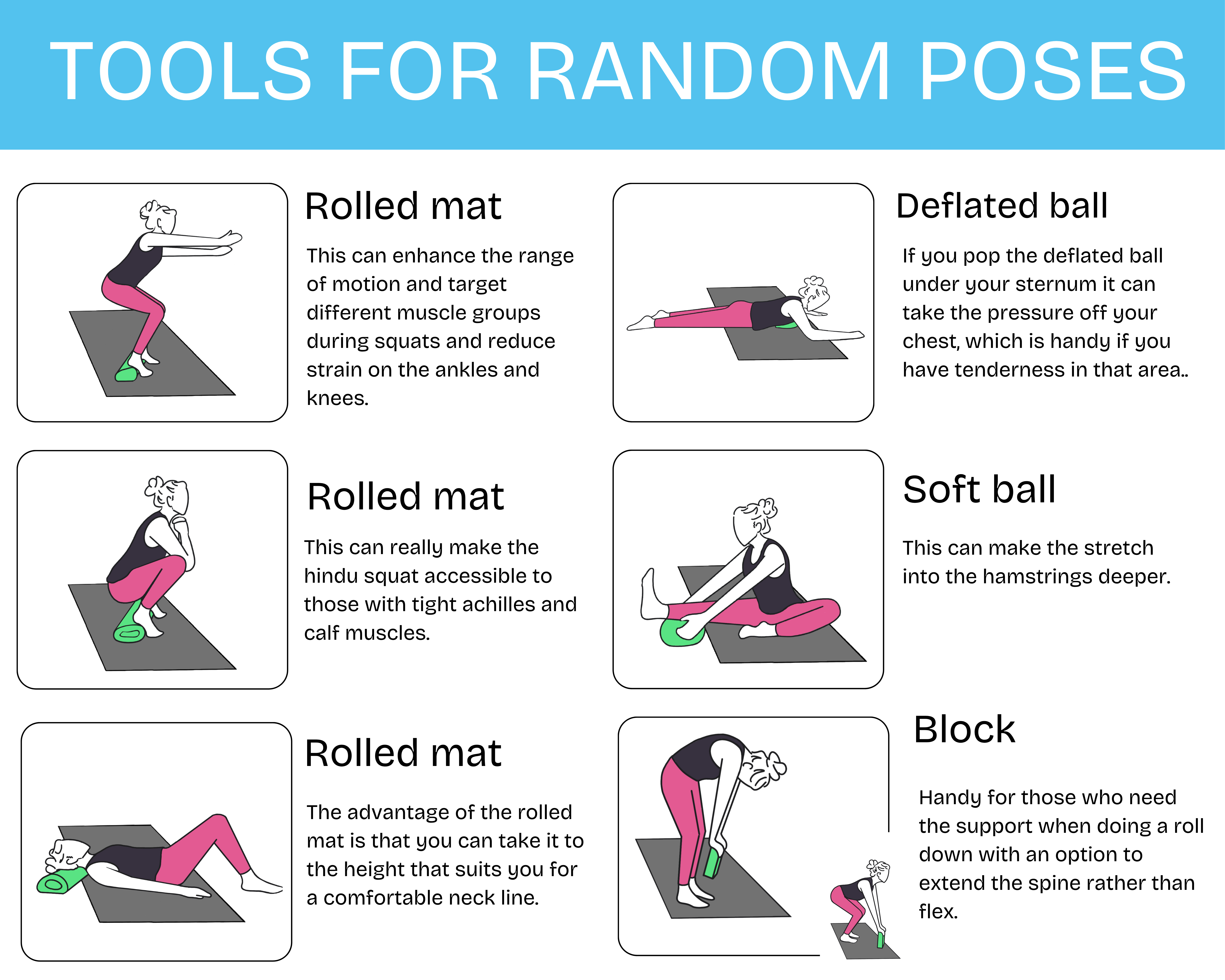
Before you start any exercise good ‘Form’ is key and having tools to hand to promote good form for those with limitations is ideal.
Here are a few simple ‘Tips and Tricks’ taken from the Purestretch Alternatives Workshop:
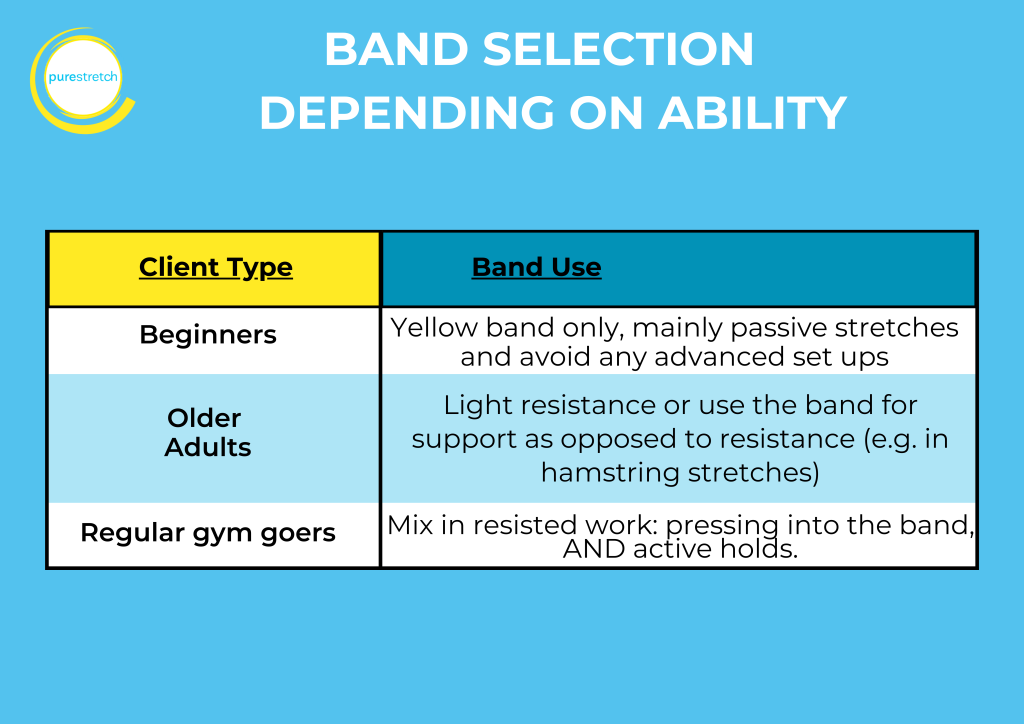
Use the light band for precision, small muscle work, and gentle stretching. Use the strong band for larger movements, stronger clients, or deeper activation/stretching.
PLEASE NOTE; It is always important to offer a No Band Option (inclusivity is key to the class experience)
We have our own selection of purestretch music that we feel is suitable for these classes. If you would like to access this please get in touch and we can add this to your dashboard.
Sample Verbal Cues:
 “Hold the band with light tension, not slack, not tight”
“Let the band take some of the work for you”
“Anchor your shoulders before you pull”
“Think steady, smooth, controlled … no yanking”
“Notice what happens as activation shifts into stretch”
“Grow tall through the spine, creating space before you stretch”
“Feel the muscles engage as you move into the stretch”
“Ease the tension before you repeat the stretch”
Key teaching principles for older adults:
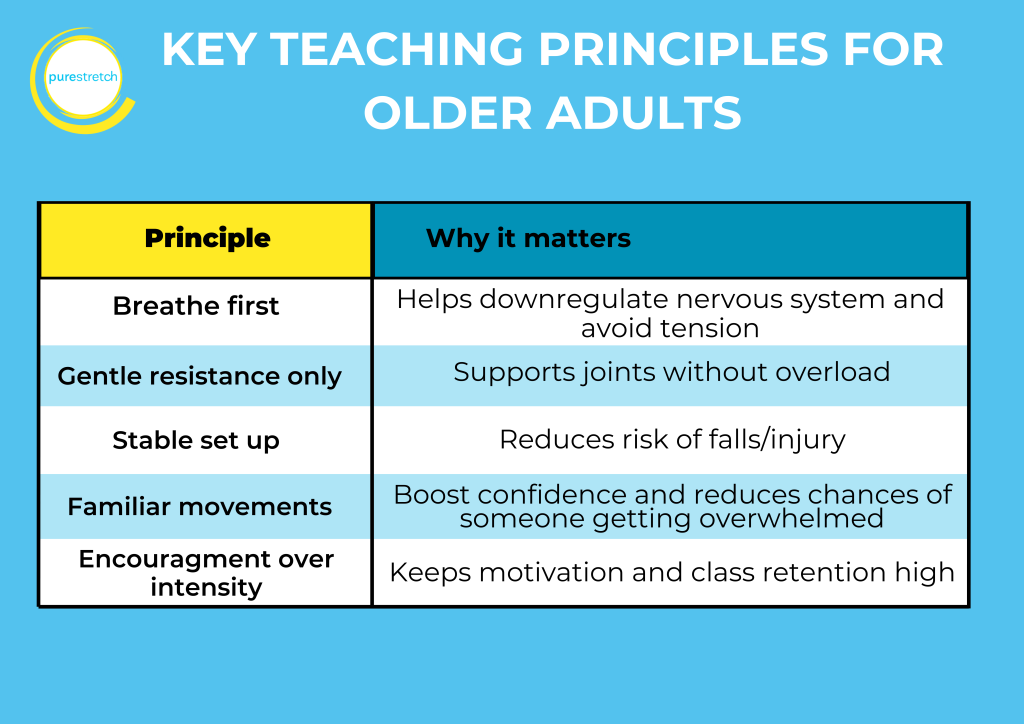
Always offer options – no band version, lighter resistance or chair support
It’s not about being fancy, it’s about feeling better!
When teaching older populations your focus is not on making classes easier, it’s about making them accessible and meaningful … No one wants to think you are going easy on them.
With that in mind, you need to focus on:
Here’s a simple Alternatives class combining all of the framework mentioned above
This class includes:
In this warm up, keep a chair close by for anyone who may need extra support with balance. The movements are intentionally simple and accessible for all abilities.
Encourage participants to take their time with each sequence and stay mindful of individual needs within the class. Some, like Martyn, may benefit from choosing a lighter resistance.
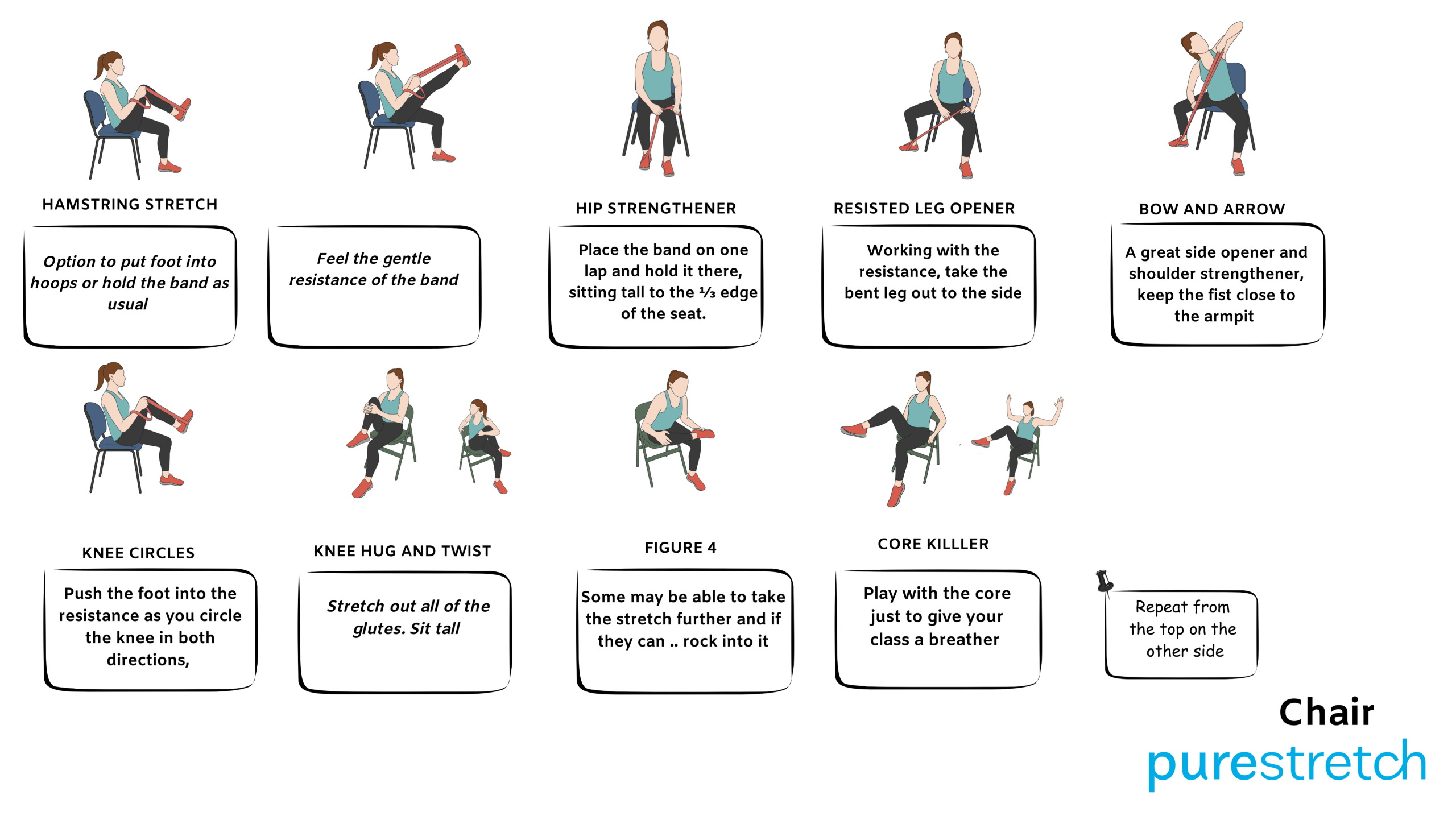
This Chair Routine is deliberately simple and easy to follow. There’s a good opportunity to take a short breather before moving to the other side. Ciaran has chosen to add a little core work before switching legs. (You’ll find plenty more core ideas in the Chair Routine on your dashboard). Another option would be to add this pause for some gentle shoulder and neck mobility or a few hand stretches.
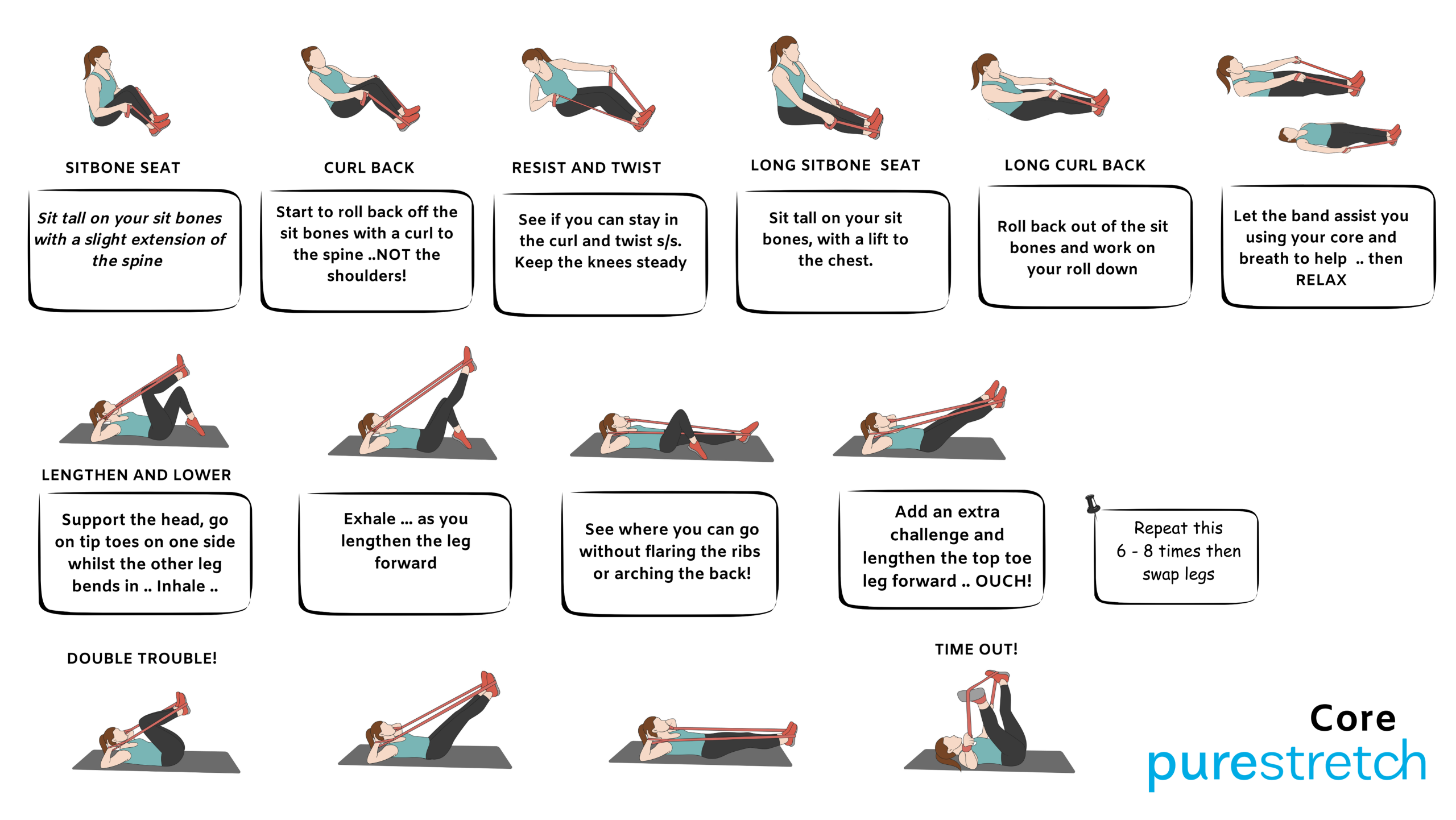
This is a fab Core Routine using the band as both an assist and resist tool. It works especially well for many who struggle to switch the core on with leaning back in a seated floor position. Martyn has a strong core and chose to take the movement to the next level. This will feel challenging for many, so keep a close eye on form and encourage quality over depth.
1. Cruz-Jentoft et al. (2019) Age and Ageing
2. Martins et al. (2015) Clinical Interventions in Ageing
3. Colado et al. (2009) Journal of Strength and Conditioning Research
4. Colado et al. (2009) International Journal of Sports Physical Therapy