Chapter 3
The Breath


Breath can be with your best training partner or your biggest roadblock when doing any form of physical exercise … like stretching!
The Inhalation
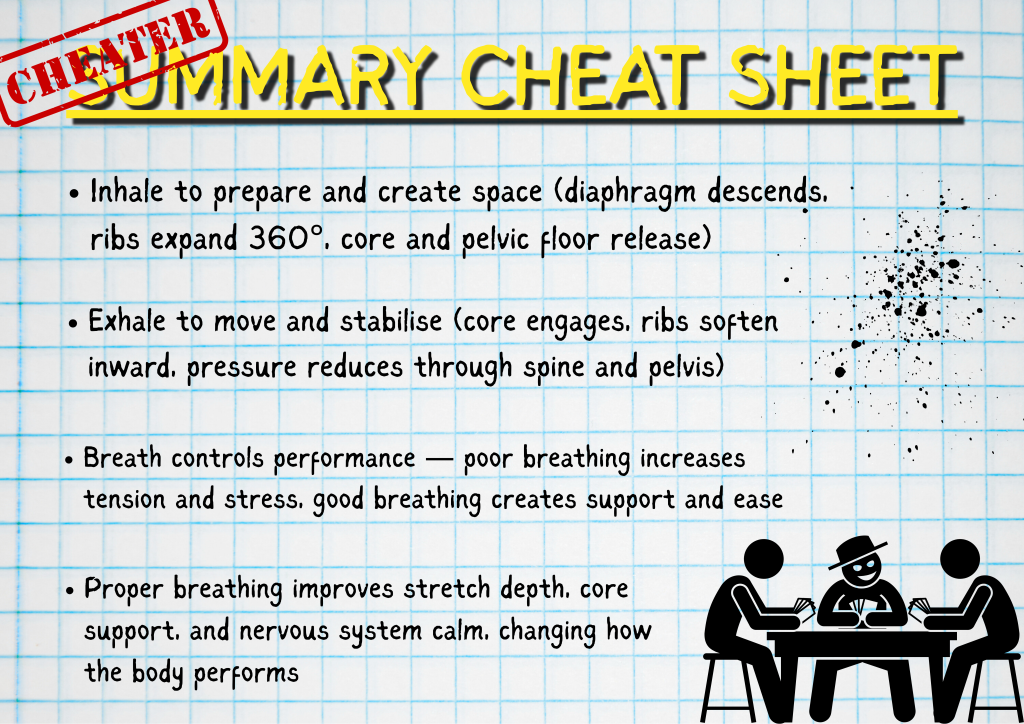
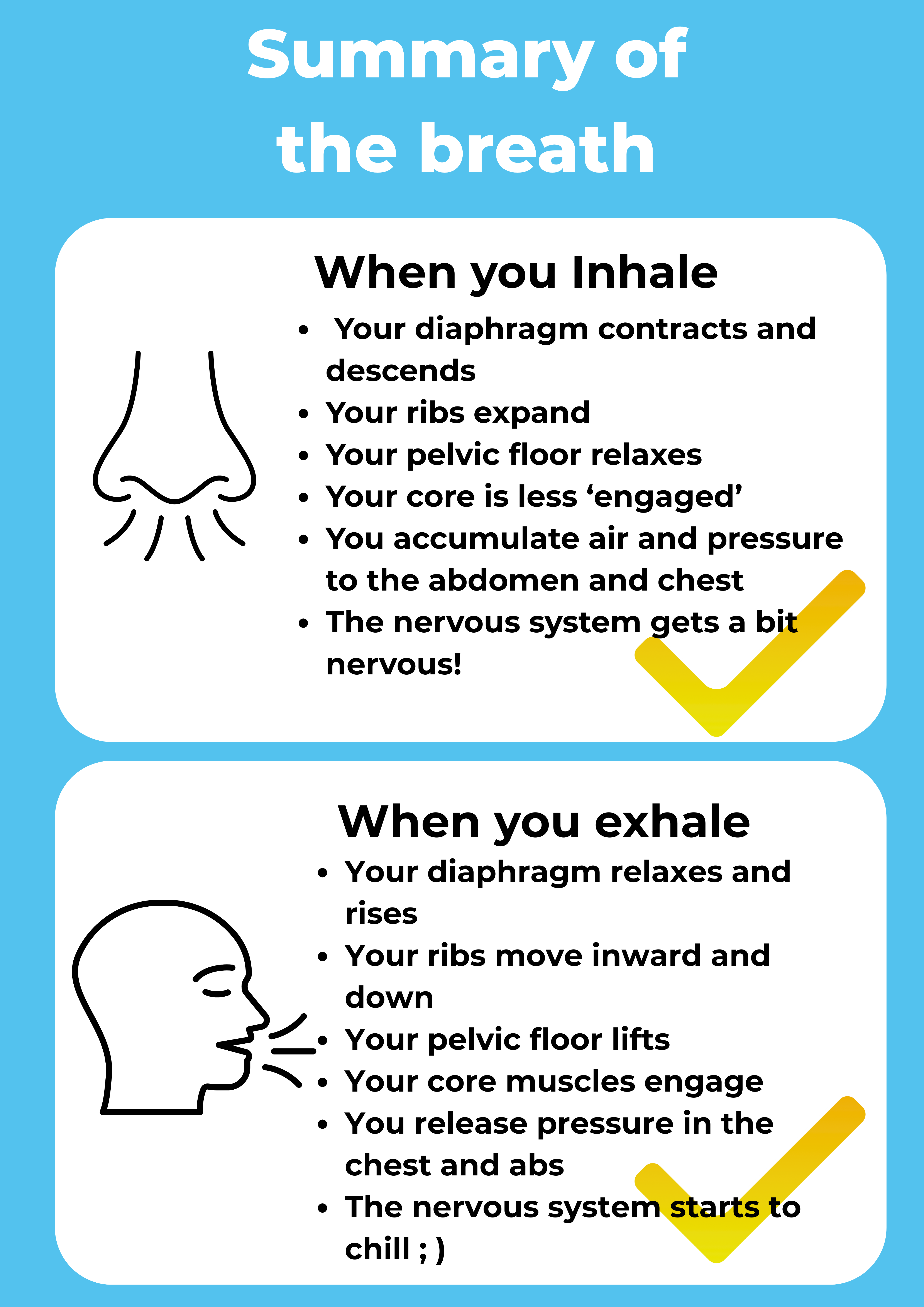
When you inhale, your diaphragm muscle contracts and moves downwards, expanding the volume of your chest cavity, which accumulates air and pressure to the abdomen and chest.
The Response:
Imagine your diaphragm as a soft umbrella sitting under your ribs ..
… When you inhale, the umbrella opens and presses downward, and underneath this ‘umbrella’ are your organs, like the liver, stomach and intestines. These organs can’t disappear, so they move outward and slightly down and this gentle shift reaches the pelvic floor giving it a soft stretch.
The Exhalation
When you exhale your diaphragm rises, your core muscles engage and your pelvic floor lifts, creating stability. This allows for the release of accumulated air from the abdomen and chest.
The Response:
The way you breathe can become your greatest support or your toughest challenge …
If you hold your breath or breathe shallowly into your chest, then your body thinks it’s under stress, so muscles tighten, oxygen drops, blood pressure rises, and suddenly everything feels harder.
But when you breathe the right way — Inhaling to prepare and Exhaling as you move — your diaphragm, core, and pelvic floor all switch on like a built-in support team.
At the same time, your nervous system gets the message to relax, letting your muscles release into a stretch. So the right breath doesn’t just feel better — it literally changes the way your body performs.
… Your breath is the secret weapon that can take your core and stretch training to the next level.