Release Overview
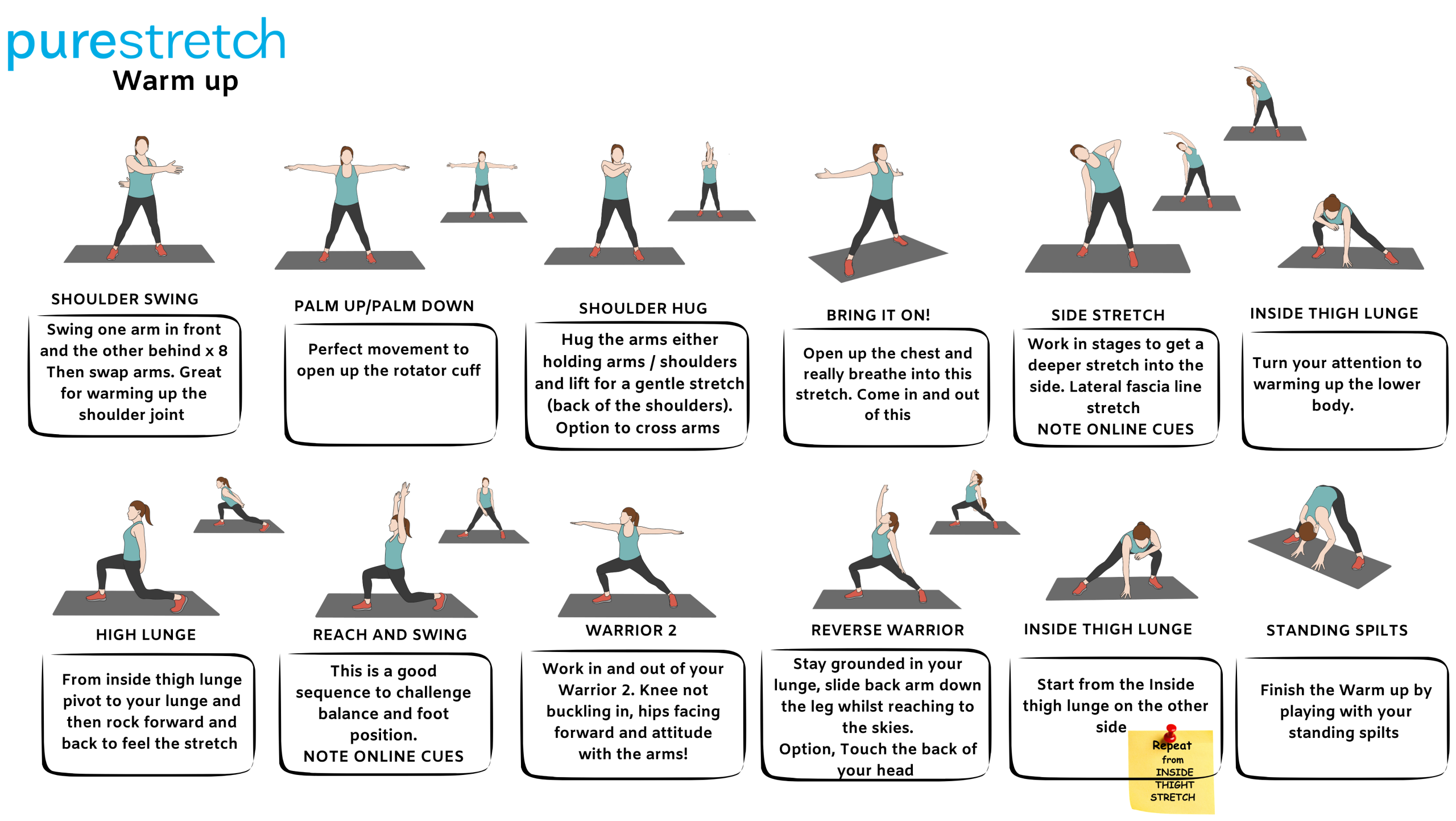
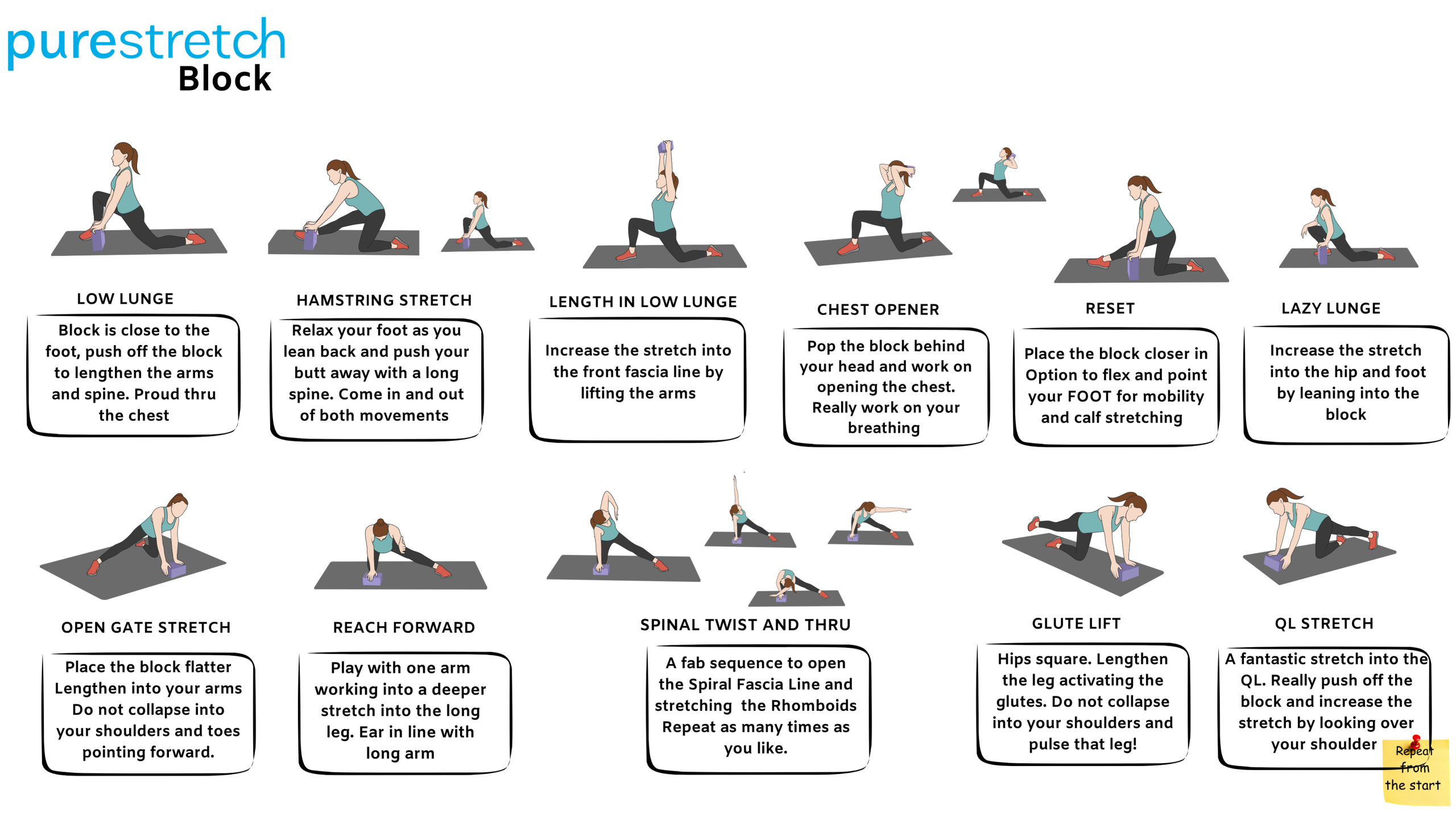
Standing warm up followed by a floor based Block routine focused on hip, core and glute activity.
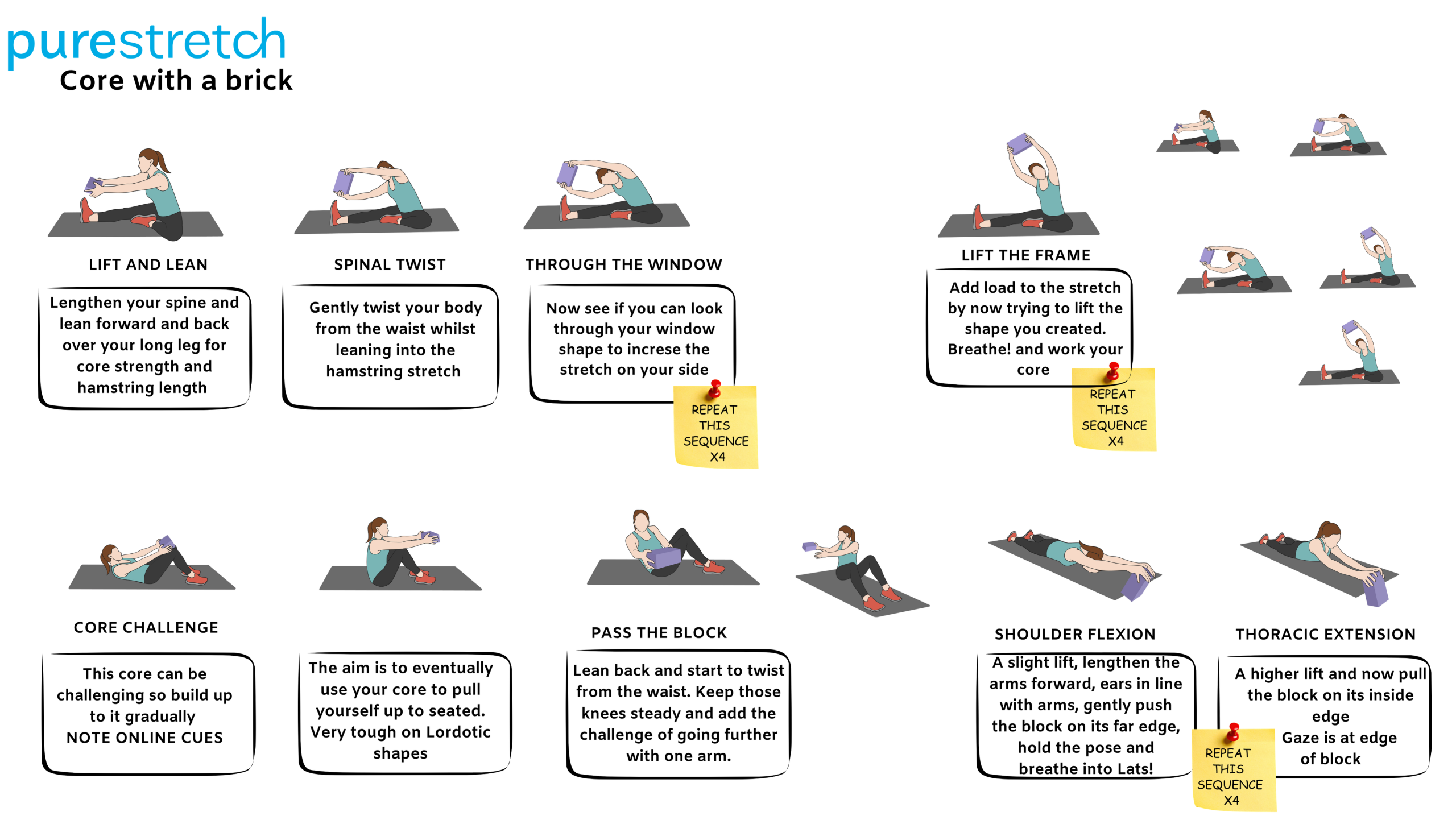
Core challenges with the block that will get a lot of moans and groans ; )
Plus downloadable PDF’s of the routines and Music.
Teaching notes
- Begin with standing warm up to prepare for floor work
- Encourage use of extra tools for more comfort in poses if needed
- Prioritise clarity over speed when teaching
- Emphasise purpose and control in every movement
Warm up
Routine with Block
Core with a block
Option for Core session
I’ve chosen 2 exercises from the Purestretch routine that I feel are worth exploring in a little more detail, helping you feel better informed and confident when teaching them to our clients or classes.
First Key Exercise:
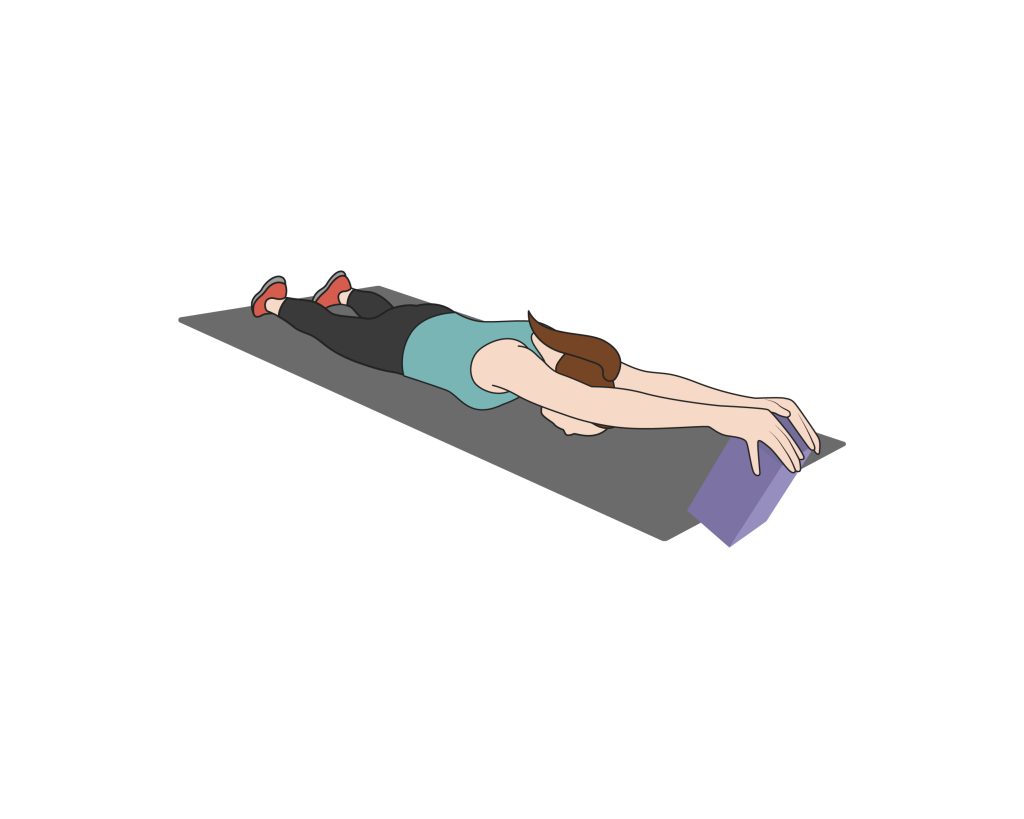
Shoulder Flexion (Prone with block)
Teacher Insight
- This exercise encourages shoulder flexion while allowing gravity to gently assist the movement.
- Watch that the movement comes from the shoulders rather than excessive arching through the lower back.
- Some participants may feel tightness through the lats, chest or the long head of the triceps before they feel the shoulders stretching.
- Encourage the shoulders to stay relaxed rather than shrugging towards the ears.
- If discomfort is felt in the front of the shoulder, reduce the range or use a lower block.
Purpose
- Improve shoulder flexion range of motion.
- Lengthen the latissimus dorsi and surrounding tissues.
- Encourage mobility through the shoulders while maintaining a long spine.
- Promote better overhead movement for everyday activities.
Teaching Cues
- “Reach your fingertips away from you.”
- “Allow your chest to soften towards the floor.”
- “Keep your neck long.”
- “Relax your shoulders away from your ears.”
- “Only move into a comfortable stretch.”
- “Take slow, relaxed breaths.”
Second Key Exercise:
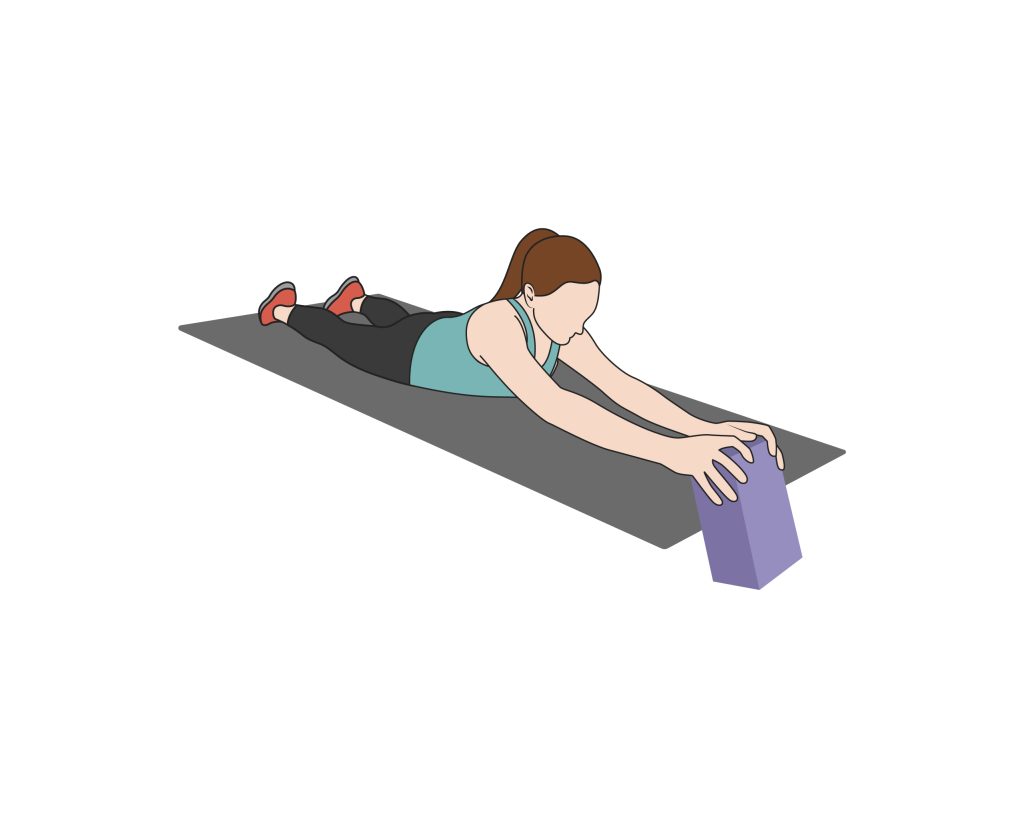
Thoracic Extension (Prone with block)
Teacher Insight
The block provides a stable point to gently encourage extension through the thoracic spine rather than hinging into the lower back.
- Think of the movement as lengthening before lifting.
- Many people compensate by overusing the neck please encourage them to keep the gaze slightly down.
- The movement should feel smooth and spacious rather than forced.
Even a small amount of thoracic extension can improve posture and breathing mechanics.
Purpose
- Improve thoracic spine extension.
- Encourage better posture.
- Increase mobility through the upper back.
- Open the front of the chest.
Improve the body’s ability to reach overhead.
Teaching Cues
- “Lengthen first, then gently lift.”
- “Keep the back of your neck long.”
- “Draw your breastbone slightly forward.”
- “Imagine your upper back widening.”
- “Allow your shoulders to soften.”
“Lift from the upper back, not the lower back.”
Resources
Download Assets

Happy Stretching!